memo

3. Detailed Memo

Investment memoConfidential

Ember

Ember is the AI that runs a home's solar, battery and EV, buying and selling power so the home stays on the cheap side of the grid.

RoundSeed
Ask$6M at $19.85M pre-money
DateJuly 2026
Strictly private and confidentialM 01 / 16
Slide 01

Cover

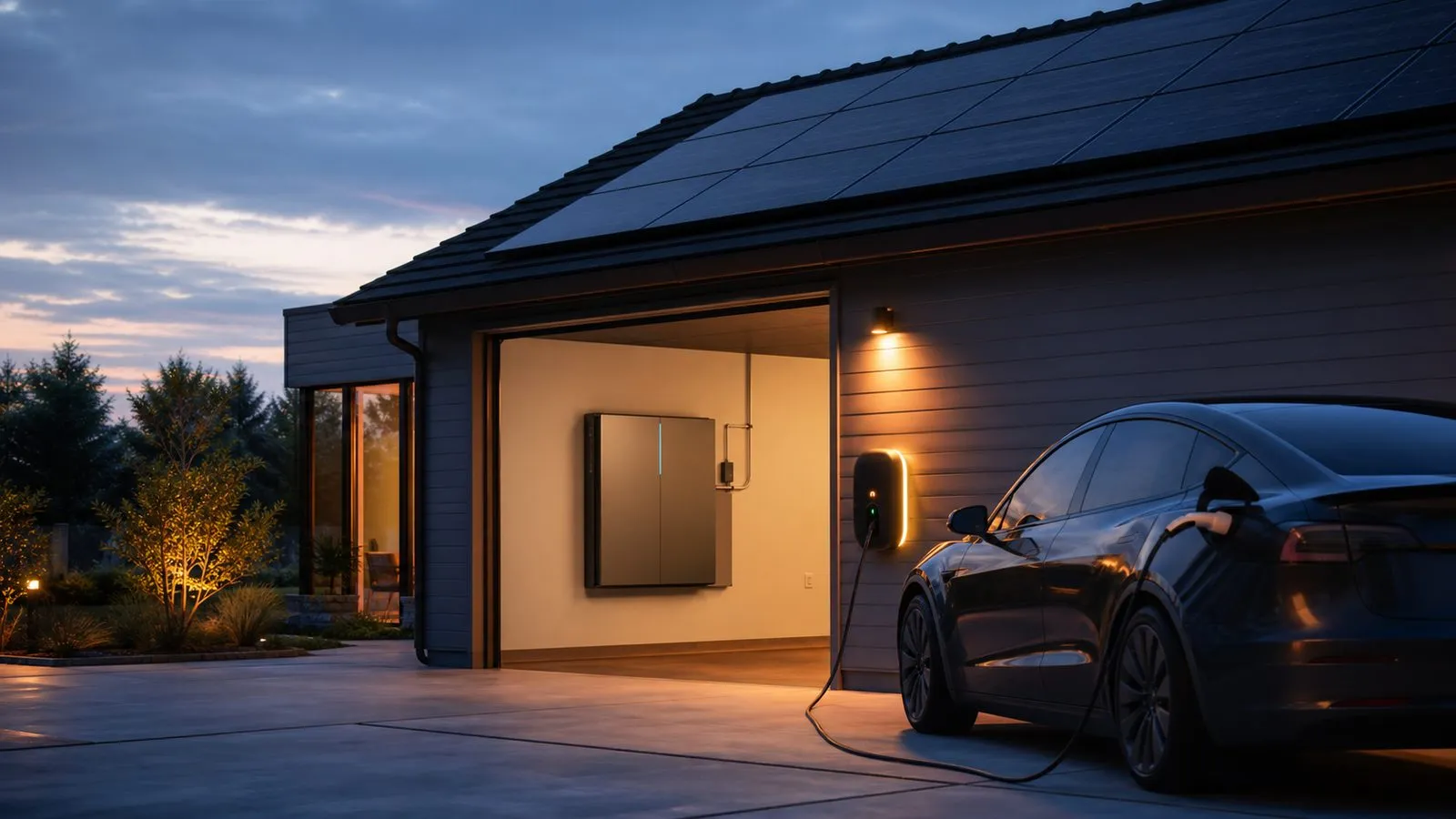
Ember opens on a simple promise: the AI that runs your home's energy, always on the cheap side of the grid. The cover frames a US home-energy company founded in 2026 raising a $6M Seed at a $19.85M pre-money valuation. What an investor should take from it is scope and clarity. Ember is not another solar app or a single smart plug. It is the layer that sits above the hardware a home already owns, the solar panels, the home battery and the EV charger, and runs them as one system. The tagline does real work here. Time-of-use electricity tariffs, where the price of power changes through the day, are spreading across US utilities. That creates a widening gap between cheap off-peak power and expensive peak power. Most homes cannot react to that gap because their kit is unmanaged and their attention is elsewhere. Ember reacts automatically. A small hub device, a phone app and cloud AI forecast prices and usage, store power when it is cheap, spend it when it is dear, and sell spare flexibility back to the grid. The business model shown lightly on the cover is two subscriptions plus two usage streams, and the raise funds a Year 1 product build ahead of a Year 2 launch. The cover sets the altitude for everything that follows: a large, opening market, a clear mechanism, and a lean team that intends to run operations with AI. It signals ambition grounded in real infrastructure rather than a speculative bet, and it invites the reader to judge Ember on execution and economics rather than novelty.

Ember opens on a simple promise: the AI that runs your home's energy, always on the cheap side of the grid. The cover frames a US home-energy company founded in 2026 raising a $6M Seed at a $19.85M pre-money valuation. What an investor should take from it is scope and clarity. Ember is not another solar app or a single smart plug. It is the layer that sits above the hardware a home already owns, the solar panels, the home battery and the EV charger, and runs them as one system. The tagline does real work here. Time-of-use electricity tariffs, where the price of power changes through the day, are spreading across US utilities. That creates a widening gap between cheap off-peak power and expensive peak power. Most homes cannot react to that gap because their kit is unmanaged and their attention is elsewhere. Ember reacts automatically. A small hub device, a phone app and cloud AI forecast prices and usage, store power when it is cheap, spend it when it is dear, and sell spare flexibility back to the grid. The business model shown lightly on the cover is two subscriptions plus two usage streams, and the raise funds a Year 1 product build ahead of a Year 2 launch. The cover sets the altitude for everything that follows: a large, opening market, a clear mechanism, and a lean team that intends to run operations with AI. It signals ambition grounded in real infrastructure rather than a speculative bet, and it invites the reader to judge Ember on execution and economics rather than novelty.

M 01 / 16
Slide 02

Problem

The problem slide makes the market case. US homes overpay for electricity they could buy far more cheaply, and the solar and batteries many already own sit largely idle. Three forces combine. First, prices swing through the day. On time-of-use tariffs, peak power can cost several times the off-peak rate, yet homes keep drawing power whenever they happen to need it. Second, home hardware is unmanaged. A household may have paid tens of thousands for solar and a battery, but without coordination that kit captures only a fraction of the value it could. Third, nobody runs it all together. Solar, battery and EV charger each come with their own app, so the home juggles three disconnected tools instead of one system that optimises the whole. The result is money left on the table every single day, quietly, at scale. Framed through a market lens, this is a roughly $40B annual US spend on home energy that software can optimise, and today almost none of it is optimised well. The pain is not dramatic, which is precisely why it persists. No single overpayment is large enough to force a household to act, so the losses compound invisibly. That is the opening. A system that captures the savings automatically, with no effort from the homeowner, turns a diffuse and ignored problem into a concrete monthly gain. The slide sets up Ember not as a nice-to-have but as the obvious missing layer in a market that has all the hardware and none of the intelligence.

The problem slide makes the market case. US homes overpay for electricity they could buy far more cheaply, and the solar and batteries many already own sit largely idle. Three forces combine. First, prices swing through the day. On time-of-use tariffs, peak power can cost several times the off-peak rate, yet homes keep drawing power whenever they happen to need it. Second, home hardware is unmanaged. A household may have paid tens of thousands for solar and a battery, but without coordination that kit captures only a fraction of the value it could. Third, nobody runs it all together. Solar, battery and EV charger each come with their own app, so the home juggles three disconnected tools instead of one system that optimises the whole. The result is money left on the table every single day, quietly, at scale. Framed through a market lens, this is a roughly $40B annual US spend on home energy that software can optimise, and today almost none of it is optimised well. The pain is not dramatic, which is precisely why it persists. No single overpayment is large enough to force a household to act, so the losses compound invisibly. That is the opening. A system that captures the savings automatically, with no effort from the homeowner, turns a diffuse and ignored problem into a concrete monthly gain. The slide sets up Ember not as a nice-to-have but as the obvious missing layer in a market that has all the hardware and none of the intelligence.

M 02 / 16
Slide 03

Solution

Ember is one AI that runs solar, battery and EV together so the home is always on the cheap side of the grid. The solution slide resolves the three problems in a single stroke. Where prices swing, Ember watches live time-of-use tariffs and acts on them minute by minute. Where hardware sits idle, Ember coordinates it, charging the battery from solar or cheap off-peak power and running the home off stored power at peak. Where three apps compete for attention, Ember replaces them with one system that needs no attention at all. The delivery is deliberately light: a small hub device that connects to existing equipment, a phone app for visibility and control, and cloud AI that does the forecasting and optimisation. Crucially, Ember is hardware-agnostic. It works with the solar, battery and EV brands a home already owns, so there is no rip-and-replace and no lock-in. That widens the addressable market to any capable home rather than a single manufacturer's customers. The economic promise is that the savings Ember generates are real and measurable, which is why the company can charge a share of them rather than a flat fee alone. For an investor, the solution is attractive because it is both simple to explain and hard to copy well: the value comes from running the whole home intelligently, not from any one clever feature. It reframes a pile of expensive but passive hardware into an active, earning asset, and it does so without asking the homeowner to change how they live.

Ember is one AI that runs solar, battery and EV together so the home is always on the cheap side of the grid. The solution slide resolves the three problems in a single stroke. Where prices swing, Ember watches live time-of-use tariffs and acts on them minute by minute. Where hardware sits idle, Ember coordinates it, charging the battery from solar or cheap off-peak power and running the home off stored power at peak. Where three apps compete for attention, Ember replaces them with one system that needs no attention at all. The delivery is deliberately light: a small hub device that connects to existing equipment, a phone app for visibility and control, and cloud AI that does the forecasting and optimisation. Crucially, Ember is hardware-agnostic. It works with the solar, battery and EV brands a home already owns, so there is no rip-and-replace and no lock-in. That widens the addressable market to any capable home rather than a single manufacturer's customers. The economic promise is that the savings Ember generates are real and measurable, which is why the company can charge a share of them rather than a flat fee alone. For an investor, the solution is attractive because it is both simple to explain and hard to copy well: the value comes from running the whole home intelligently, not from any one clever feature. It reframes a pile of expensive but passive hardware into an active, earning asset, and it does so without asking the homeowner to change how they live.

M 03 / 16
Slide 04

Product

The product slide shows what Ember actually is and why it is defensible. At its core sit three capabilities. Whole-home control ties solar, battery and EV charger into a single automatic system, so the home behaves as one coordinated unit rather than a set of gadgets. Live tariff tracking watches time-of-use prices across US utilities in real time, giving the AI the signal it needs to act. Hardware independence means Ember works with the brands a home already owns, which removes the biggest barrier to adoption. Physically, the product is modest by design: a hub device, a phone app and cloud AI. That lightness matters. It keeps the cost of goods low, supports the ramp to roughly 65% gross margin over time, and lets a home go live in minutes rather than through a costly installation. The intelligence is the product. Ember forecasts tomorrow's prices and the home's likely usage, then plans when to store and when to spend, improving as it sees more homes and more tariff patterns. This is where a data advantage builds. Every home Ember runs makes its models better across every brand of equipment, an edge that single-manufacturer tools cannot match because they only ever see their own kit. For an investor, the product story is about leverage: cheap hardware, software margins, and a model that compounds with scale. It is the difference between selling a device and owning the optimisation layer that sits above all devices, which is a far more durable position.

The product slide shows what Ember actually is and why it is defensible. At its core sit three capabilities. Whole-home control ties solar, battery and EV charger into a single automatic system, so the home behaves as one coordinated unit rather than a set of gadgets. Live tariff tracking watches time-of-use prices across US utilities in real time, giving the AI the signal it needs to act. Hardware independence means Ember works with the brands a home already owns, which removes the biggest barrier to adoption. Physically, the product is modest by design: a hub device, a phone app and cloud AI. That lightness matters. It keeps the cost of goods low, supports the ramp to roughly 65% gross margin over time, and lets a home go live in minutes rather than through a costly installation. The intelligence is the product. Ember forecasts tomorrow's prices and the home's likely usage, then plans when to store and when to spend, improving as it sees more homes and more tariff patterns. This is where a data advantage builds. Every home Ember runs makes its models better across every brand of equipment, an edge that single-manufacturer tools cannot match because they only ever see their own kit. For an investor, the product story is about leverage: cheap hardware, software margins, and a model that compounds with scale. It is the difference between selling a device and owning the optimisation layer that sits above all devices, which is a far more durable position.

M 04 / 16
Slide 05

How it works

How it works turns the product into four plain steps a non-technical reader can follow. First, plug in the hub, which connects to the home's solar, battery and EV charger in minutes. Second, forecast: the AI predicts the next day's electricity prices and the household's likely usage. Third, store cheap, charging the battery from solar or off-peak power when it costs the least. Fourth, spend at peak, running the home off that stored power when grid prices are highest, and where possible earn from the grid by selling spare flexibility into utility programmes. The elegance is that all of this happens automatically. The homeowner sets their comfort limits once and then leaves Ember alone, checking the app when they want to see what they saved and earned. The slide is designed to make the investor think this is refreshingly simple, because operational simplicity is what drives adoption and retention in consumer energy. Complexity is the enemy of a household that just wants a lower bill. By hiding the sophistication of forecasting and optimisation behind a single plug-in-and-forget experience, Ember lowers the effort of adoption to near zero while keeping the value high. From plug-in to first saving takes about a day. The step sequence also quietly reinforces the moat: the forecasting and grid-earning steps are where the hard technology lives, and they are the parts a casual competitor cannot easily replicate. It is a clean narrative that connects a simple user experience to a genuinely difficult engineering core.

How it works turns the product into four plain steps a non-technical reader can follow. First, plug in the hub, which connects to the home's solar, battery and EV charger in minutes. Second, forecast: the AI predicts the next day's electricity prices and the household's likely usage. Third, store cheap, charging the battery from solar or off-peak power when it costs the least. Fourth, spend at peak, running the home off that stored power when grid prices are highest, and where possible earn from the grid by selling spare flexibility into utility programmes. The elegance is that all of this happens automatically. The homeowner sets their comfort limits once and then leaves Ember alone, checking the app when they want to see what they saved and earned. The slide is designed to make the investor think this is refreshingly simple, because operational simplicity is what drives adoption and retention in consumer energy. Complexity is the enemy of a household that just wants a lower bill. By hiding the sophistication of forecasting and optimisation behind a single plug-in-and-forget experience, Ember lowers the effort of adoption to near zero while keeping the value high. From plug-in to first saving takes about a day. The step sequence also quietly reinforces the moat: the forecasting and grid-earning steps are where the hard technology lives, and they are the parts a casual competitor cannot easily replicate. It is a clean narrative that connects a simple user experience to a genuinely difficult engineering core.

M 05 / 16
Slide 06

Value proposition

The value proposition slide compares Ember against the alternatives a homeowner has today and shows why only Ember runs the whole home while being paid only when the home saves. Doing nothing means paying full peak prices, leaving solar unmanaged and earning nothing from the grid. Manual timers offer rough, fixed schedules that ignore live prices and demand constant fiddling. Single-device apps control just one piece of kit and lock the home to one manufacturer. Hardware makers such as Tesla optimise only their own equipment and will not touch third-party gear. Against all of these, Ember runs the whole home, works with any brand, earns from the grid through VPP programmes, and, most importantly, charges only when the customer actually saves. That last point is the alignment that reframes the whole category. Competitors are paid whether or not the customer benefits. Ember's savings-share model means its revenue rises and falls with the value it delivers, which builds trust, lowers churn and fuels referrals between neighbours. For an investor, the comparison grid does two jobs. It shows that the alternatives are real but structurally limited, so Ember is not fighting a single dominant incumbent but a set of partial solutions. And it shows that Ember's differentiation is not a feature that can be bolted on, it is a business-model choice combined with hardware independence. Together those put Ember in a class of one within the comparison, which is exactly the position an early-stage investor wants to see a company occupy before it scales.

The value proposition slide compares Ember against the alternatives a homeowner has today and shows why only Ember runs the whole home while being paid only when the home saves. Doing nothing means paying full peak prices, leaving solar unmanaged and earning nothing from the grid. Manual timers offer rough, fixed schedules that ignore live prices and demand constant fiddling. Single-device apps control just one piece of kit and lock the home to one manufacturer. Hardware makers such as Tesla optimise only their own equipment and will not touch third-party gear. Against all of these, Ember runs the whole home, works with any brand, earns from the grid through VPP programmes, and, most importantly, charges only when the customer actually saves. That last point is the alignment that reframes the whole category. Competitors are paid whether or not the customer benefits. Ember's savings-share model means its revenue rises and falls with the value it delivers, which builds trust, lowers churn and fuels referrals between neighbours. For an investor, the comparison grid does two jobs. It shows that the alternatives are real but structurally limited, so Ember is not fighting a single dominant incumbent but a set of partial solutions. And it shows that Ember's differentiation is not a feature that can be bolted on, it is a business-model choice combined with hardware independence. Together those put Ember in a class of one within the comparison, which is exactly the position an early-stage investor wants to see a company occupy before it scales.

M 06 / 16
Slide 07

Features

The features slide translates the product into five customer benefits. Auto-arbitrage buys power when it is cheap, stores it, and spends it at peak, which is the core saving. Live tariff tracking follows time-of-use prices in real time so the timing is always right. Grid earnings get the home paid for the flexibility it shares through VPP programmes, turning a cost centre into a small income stream. Hardware independence means Ember works with the kit the home already owns, so there is nothing to rip out. And the savings-share model means the customer pays Ember only when they save, which is as much a trust feature as a commercial one. The through-line the slide wants to land is effortlessness. Set it once, and Ember quietly earns its keep every day without the homeowner thinking about power prices again. For an investor, the value of this slide is that each feature maps to a durable advantage rather than a checkbox. Auto-arbitrage and live tariff tracking are where the forecasting technology pays off. Grid earnings open a second revenue stream that also deepens the utility relationship. Hardware independence expands the market and weakens single-brand competitors. Savings-share aligns incentives and drives organic growth. Read together, the features are not a grab bag but a reinforcing set, each one making the others more valuable. That coherence is what separates a product with five features from a product with a strategy, and it is the reason the feature list supports a premium, defensible position rather than a race to add more toggles than the next app.

The features slide translates the product into five customer benefits. Auto-arbitrage buys power when it is cheap, stores it, and spends it at peak, which is the core saving. Live tariff tracking follows time-of-use prices in real time so the timing is always right. Grid earnings get the home paid for the flexibility it shares through VPP programmes, turning a cost centre into a small income stream. Hardware independence means Ember works with the kit the home already owns, so there is nothing to rip out. And the savings-share model means the customer pays Ember only when they save, which is as much a trust feature as a commercial one. The through-line the slide wants to land is effortlessness. Set it once, and Ember quietly earns its keep every day without the homeowner thinking about power prices again. For an investor, the value of this slide is that each feature maps to a durable advantage rather than a checkbox. Auto-arbitrage and live tariff tracking are where the forecasting technology pays off. Grid earnings open a second revenue stream that also deepens the utility relationship. Hardware independence expands the market and weakens single-brand competitors. Savings-share aligns incentives and drives organic growth. Read together, the features are not a grab bag but a reinforcing set, each one making the others more valuable. That coherence is what separates a product with five features from a product with a strategy, and it is the reason the feature list supports a premium, defensible position rather than a race to add more toggles than the next app.

M 07 / 16
Slide 08

Why now

Why now argues that four shifts are opening this market at the same moment, which is what makes 2026 the right year to build Ember rather than three years ago or three years from now. First, time-of-use tariffs are spreading across US utilities, moving homes onto hourly pricing and widening the gap between cheap and peak power. That gap is the raw material Ember converts into savings, and it is growing. Second, home batteries have become dramatically cheaper, so storage now sits in ordinary homes rather than only in early-adopter households. Without storage there is nothing to arbitrage, so falling battery costs directly expand Ember's addressable base. Third, EVs are everywhere, adding a large, flexible load that is perfect for shifting to cheap hours and painful to manage by hand. Fourth, grids are increasingly willing to pay households for flexibility through virtual power plant programmes, creating a second revenue stream that did not meaningfully exist before. Any one of these alone would be interesting. Together they compound: more homes have the hardware, the price signal is sharper, and the grid now pays for participation. The timing case for an investor is that the enabling conditions have only just aligned, and no incumbent is yet running all of them together for the homeowner. Hardware makers optimise their own kit, utilities run blunt demand-response, and point apps handle one device. The window to become the optimisation layer across the whole home is open now, and windows like this do not stay open for long once the pieces are in place.

Why now argues that four shifts are opening this market at the same moment, which is what makes 2026 the right year to build Ember rather than three years ago or three years from now. First, time-of-use tariffs are spreading across US utilities, moving homes onto hourly pricing and widening the gap between cheap and peak power. That gap is the raw material Ember converts into savings, and it is growing. Second, home batteries have become dramatically cheaper, so storage now sits in ordinary homes rather than only in early-adopter households. Without storage there is nothing to arbitrage, so falling battery costs directly expand Ember's addressable base. Third, EVs are everywhere, adding a large, flexible load that is perfect for shifting to cheap hours and painful to manage by hand. Fourth, grids are increasingly willing to pay households for flexibility through virtual power plant programmes, creating a second revenue stream that did not meaningfully exist before. Any one of these alone would be interesting. Together they compound: more homes have the hardware, the price signal is sharper, and the grid now pays for participation. The timing case for an investor is that the enabling conditions have only just aligned, and no incumbent is yet running all of them together for the homeowner. Hardware makers optimise their own kit, utilities run blunt demand-response, and point apps handle one device. The window to become the optimisation layer across the whole home is open now, and windows like this do not stay open for long once the pieces are in place.

M 08 / 16
Slide 08

Market

The market slide sizes the prize and shows the path from the whole market to the slice Ember can realistically capture. The total addressable market is roughly $40B a year, the US home-energy spend that software can optimise. The serviceable addressable market is about $9B, the homes that already own solar plus a battery and can therefore benefit from Ember today. The serviceable obtainable market is $74.2M, the Year 5 run-rate implied by around 312k homes paying roughly $19 a month on average, which reconciles to the financial model rather than being a top-down guess. The structure matters as much as the numbers. The TAM establishes that this is a large, mainstream market, not a niche. The SAM narrows it to homes that can act now, which keeps the near-term plan honest. The SOM ties the whole story back to the forecast, so the ambition is grounded in unit-level assumptions an investor can test. The market is also growing on its own, pulled up by the same four shifts in the why-now slide, so Ember is not relying solely on taking share, it is riding an expanding base. For an investor, the key takeaway is that the market is large, growing and wide open. There is no dominant whole-home optimiser today, so the competitive question is not whether Ember can unseat a giant but whether it can execute fast enough to become the default before the category consolidates. The sizing is deliberately conservative on capture, which makes the upside credible rather than fanciful.

The market slide sizes the prize and shows the path from the whole market to the slice Ember can realistically capture. The total addressable market is roughly $40B a year, the US home-energy spend that software can optimise. The serviceable addressable market is about $9B, the homes that already own solar plus a battery and can therefore benefit from Ember today. The serviceable obtainable market is $74.2M, the Year 5 run-rate implied by around 312k homes paying roughly $19 a month on average, which reconciles to the financial model rather than being a top-down guess. The structure matters as much as the numbers. The TAM establishes that this is a large, mainstream market, not a niche. The SAM narrows it to homes that can act now, which keeps the near-term plan honest. The SOM ties the whole story back to the forecast, so the ambition is grounded in unit-level assumptions an investor can test. The market is also growing on its own, pulled up by the same four shifts in the why-now slide, so Ember is not relying solely on taking share, it is riding an expanding base. For an investor, the key takeaway is that the market is large, growing and wide open. There is no dominant whole-home optimiser today, so the competitive question is not whether Ember can unseat a giant but whether it can execute fast enough to become the default before the category consolidates. The sizing is deliberately conservative on capture, which makes the upside credible rather than fanciful.

M 09 / 16
Slide 09

Business model

The business-model slide shows how Ember makes money from each home, and the design is what gives the company both predictable and upside revenue. There are two subscription tiers. Ember Home at $12 a month provides base optimisation. Ember Max at $29 a month adds EV and battery control, VPP access and priority support. On top of subscriptions sit two usage-based streams. The savings-share means Ember keeps 20% of the arbitrage savings it generates, so the customer keeps the other 80% and Ember earns more precisely when it delivers more. Grid-services revenue comes from utilities paying for the aggregated flexibility of pooled homes through VPP programmes. Blended revenue per home rises from about $9 a month toward $19 as homes upgrade to Max and as grid-services participation grows. That blend is the heart of the model. The subscription gives a recurring, forecastable base that supports the roughly 65% gross margin the business targets at scale. The savings-share aligns incentives and grows with the widening tariff spread. The grid-services stream deepens the utility relationship and adds revenue that does not depend on the individual household at all. For an investor, the attraction is diversification within a single customer: three ways to earn from one home, each with a different driver, so the model is resilient to any one lever moving. It also means the company can grow revenue per home without raising the subscription price, simply by delivering more savings and more grid value, which is a healthier growth path than repeated price increases.

The business-model slide shows how Ember makes money from each home, and the design is what gives the company both predictable and upside revenue. There are two subscription tiers. Ember Home at $12 a month provides base optimisation. Ember Max at $29 a month adds EV and battery control, VPP access and priority support. On top of subscriptions sit two usage-based streams. The savings-share means Ember keeps 20% of the arbitrage savings it generates, so the customer keeps the other 80% and Ember earns more precisely when it delivers more. Grid-services revenue comes from utilities paying for the aggregated flexibility of pooled homes through VPP programmes. Blended revenue per home rises from about $9 a month toward $19 as homes upgrade to Max and as grid-services participation grows. That blend is the heart of the model. The subscription gives a recurring, forecastable base that supports the roughly 65% gross margin the business targets at scale. The savings-share aligns incentives and grows with the widening tariff spread. The grid-services stream deepens the utility relationship and adds revenue that does not depend on the individual household at all. For an investor, the attraction is diversification within a single customer: three ways to earn from one home, each with a different driver, so the model is resilient to any one lever moving. It also means the company can grow revenue per home without raising the subscription price, simply by delivering more savings and more grid value, which is a healthier growth path than repeated price increases.

M 10 / 16
Slide 10

Go to market

The go-to-market slide explains how Ember reaches homes efficiently, and the answer is to start where the hardware already exists and let partners carry the cost of acquisition. The first motion is installer partnerships. Solar and battery installers bundle Ember at the point of sale, which puts the product in front of exactly the right homes at the moment they are already investing, and sharply lowers customer acquisition cost. The second is utility and VPP deals, where utilities bring Ember to their customers because it unlocks the household flexibility the grid wants. The third is a direct app for homes that already own capable kit and can simply sign up. Referrals form a fourth, compounding channel, powered by the trust the savings-share model creates between neighbours who compare bills. Content and search fill the top of the funnel by ranking for high-intent queries about cutting home power bills. The strategy is deliberately partner-led rather than paid-media-led, because in consumer energy the trusted introduction, from an installer or a utility, converts far better and costs far less than cold advertising. For an investor, the important point is that these channels reinforce each other. Installers and utilities provide low-cost volume, happy customers provide referrals, and content captures demand that the partners generate. As the installed base grows, acquisition cost should fall, which is exactly the CAC trajectory the model assumes. The go-to-market plan is credible because it aligns with how homeowners actually make energy decisions, through people they already trust, rather than assuming Ember can buy its way to scale.

The go-to-market slide explains how Ember reaches homes efficiently, and the answer is to start where the hardware already exists and let partners carry the cost of acquisition. The first motion is installer partnerships. Solar and battery installers bundle Ember at the point of sale, which puts the product in front of exactly the right homes at the moment they are already investing, and sharply lowers customer acquisition cost. The second is utility and VPP deals, where utilities bring Ember to their customers because it unlocks the household flexibility the grid wants. The third is a direct app for homes that already own capable kit and can simply sign up. Referrals form a fourth, compounding channel, powered by the trust the savings-share model creates between neighbours who compare bills. Content and search fill the top of the funnel by ranking for high-intent queries about cutting home power bills. The strategy is deliberately partner-led rather than paid-media-led, because in consumer energy the trusted introduction, from an installer or a utility, converts far better and costs far less than cold advertising. For an investor, the important point is that these channels reinforce each other. Installers and utilities provide low-cost volume, happy customers provide referrals, and content captures demand that the partners generate. As the installed base grows, acquisition cost should fall, which is exactly the CAC trajectory the model assumes. The go-to-market plan is credible because it aligns with how homeowners actually make energy decisions, through people they already trust, rather than assuming Ember can buy its way to scale.

M 11 / 16
Slide 11

Team

The team slide argues that this specific group can win, because the problem sits at the intersection of energy markets, forecasting AI and consumer hardware, and the founders and early leaders cover all three. The chief executive has led product at a home-energy startup and worked on utility strategy, so understands both the customer and the counterparties. The chief technology officer built forecasting AI at a grid-scale trading firm, which is precisely the discipline that turns live tariff data into profitable buy-and-store decisions. The head of energy markets ran demand-response and VPP programmes at a US utility, giving Ember credibility and relationships on the grid-services side that are hard to build cold. Around them, a head of growth who scaled a consumer subscription app past a million users, a head of hardware who has shipped connected-home devices at scale, and a head of data science who built pricing and forecasting models for energy trading. The composition is intentional. Energy is a domain where naive consumer teams underestimate the grid and pure energy teams underestimate the consumer, and Ember's bench is built to avoid both traps. The team is also deliberately lean, around 18 people, with the stated intention to run operations with AI, which is consistent with the disciplined plan that turns profitable in Year 5. For an investor, the team is the answer to the main execution risk in the plan, that coordinating hardware, software and utility relationships is genuinely hard. The credentials are placeholders appropriate to a sample, but the shape of the team, deep in exactly the three areas the business needs, is the point the slide is making.

The team slide argues that this specific group can win, because the problem sits at the intersection of energy markets, forecasting AI and consumer hardware, and the founders and early leaders cover all three. The chief executive has led product at a home-energy startup and worked on utility strategy, so understands both the customer and the counterparties. The chief technology officer built forecasting AI at a grid-scale trading firm, which is precisely the discipline that turns live tariff data into profitable buy-and-store decisions. The head of energy markets ran demand-response and VPP programmes at a US utility, giving Ember credibility and relationships on the grid-services side that are hard to build cold. Around them, a head of growth who scaled a consumer subscription app past a million users, a head of hardware who has shipped connected-home devices at scale, and a head of data science who built pricing and forecasting models for energy trading. The composition is intentional. Energy is a domain where naive consumer teams underestimate the grid and pure energy teams underestimate the consumer, and Ember's bench is built to avoid both traps. The team is also deliberately lean, around 18 people, with the stated intention to run operations with AI, which is consistent with the disciplined plan that turns profitable in Year 5. For an investor, the team is the answer to the main execution risk in the plan, that coordinating hardware, software and utility relationships is genuinely hard. The credentials are placeholders appropriate to a sample, but the shape of the team, deep in exactly the three areas the business needs, is the point the slide is making.

M 12 / 16
Slide 12

Competitive advantage

The competitive-advantage slide states plainly why Ember can hold a lead rather than simply reach it first. Four advantages compound. First, hardware-agnostic AI runs solar, battery and EV as one system, so Ember serves any capable home rather than a single manufacturer's customers. Second, savings-share pricing means Ember is paid only when the home saves, an alignment competitors who charge flat fees cannot easily match without undermining their own economics. Third, whole-home data across brands makes the forecasting models better with every home added, an edge single-brand tools structurally cannot build because they only see their own equipment. Fourth, VPP access turns pooled homes into a paid grid asset, which both adds revenue and deepens the utility relationships that are hard for a newcomer to replicate. Plotted against the field, hardware makers like Tesla sit high on control of their own kit but low on hardware independence, utilities run broad but blunt programmes, and single-device apps are narrow on both axes. Ember occupies the corner that is both whole-home and brand-independent. The investor takeaway is about durability. First-mover advantage fades quickly in software, so the question is what protects the position once others notice the opportunity. Ember's answer is a combination that is hard to assemble: a business model choice, a data flywheel and a set of grid relationships that each take time and trust to build. Any one could be copied in isolation, but together, and reinforced by a growing installed base, they widen the lead over time rather than inviting it to erode.

The competitive-advantage slide states plainly why Ember can hold a lead rather than simply reach it first. Four advantages compound. First, hardware-agnostic AI runs solar, battery and EV as one system, so Ember serves any capable home rather than a single manufacturer's customers. Second, savings-share pricing means Ember is paid only when the home saves, an alignment competitors who charge flat fees cannot easily match without undermining their own economics. Third, whole-home data across brands makes the forecasting models better with every home added, an edge single-brand tools structurally cannot build because they only see their own equipment. Fourth, VPP access turns pooled homes into a paid grid asset, which both adds revenue and deepens the utility relationships that are hard for a newcomer to replicate. Plotted against the field, hardware makers like Tesla sit high on control of their own kit but low on hardware independence, utilities run broad but blunt programmes, and single-device apps are narrow on both axes. Ember occupies the corner that is both whole-home and brand-independent. The investor takeaway is about durability. First-mover advantage fades quickly in software, so the question is what protects the position once others notice the opportunity. Ember's answer is a combination that is hard to assemble: a business model choice, a data flywheel and a set of grid relationships that each take time and trust to build. Any one could be copied in isolation, but together, and reinforced by a growing installed base, they widen the lead over time rather than inviting it to erode.

M 13 / 16
Slide 13

Roadmap

The roadmap slide lays out three phases from build to category leadership and ties each to a funding stage, so the investor can see how the $6M Seed fits the larger plan. Phase one, across 2026 to 2027 and funded by this Seed round, is build and launch: ship the hub, app and cloud AI, sign the first installer partners, certify with two US utilities, onboard the first paying homes and prove the savings-share economics. This is the phase the current raise pays for, and it is deliberately about de-risking the model rather than chasing scale. Phase two, 2028 to 2029 and funded by a modelled $28M Series A, scales the channel: reach around 69k homes, launch the Ember Max VPP tier, add roughly ten utility markets, grow revenue to $12.1M and reach 42% gross margin. Phase three, 2030 to 2031 and supported by a modelled $18M Series B, is category leadership: pass 312k homes, reach $74.2M revenue, hit 65% gross margin and turn EBITDA-positive while expanding grid-services revenue. The sequencing matters. Each phase has a clear objective, a matching capital event and measurable milestones, so progress can be judged rather than assumed. The follow-on rounds are shown as part of the plan, which signals that management understands the capital intensity of scaling a hardware-touching consumer business and has planned cash accordingly. For an investor, the roadmap frames the Seed as the first, well-defined step on a financed path, where the near-term milestones are concrete and the later ambitions are grounded in the same unit economics that drive the forecast.

The roadmap slide lays out three phases from build to category leadership and ties each to a funding stage, so the investor can see how the $6M Seed fits the larger plan. Phase one, across 2026 to 2027 and funded by this Seed round, is build and launch: ship the hub, app and cloud AI, sign the first installer partners, certify with two US utilities, onboard the first paying homes and prove the savings-share economics. This is the phase the current raise pays for, and it is deliberately about de-risking the model rather than chasing scale. Phase two, 2028 to 2029 and funded by a modelled $28M Series A, scales the channel: reach around 69k homes, launch the Ember Max VPP tier, add roughly ten utility markets, grow revenue to $12.1M and reach 42% gross margin. Phase three, 2030 to 2031 and supported by a modelled $18M Series B, is category leadership: pass 312k homes, reach $74.2M revenue, hit 65% gross margin and turn EBITDA-positive while expanding grid-services revenue. The sequencing matters. Each phase has a clear objective, a matching capital event and measurable milestones, so progress can be judged rather than assumed. The follow-on rounds are shown as part of the plan, which signals that management understands the capital intensity of scaling a hardware-touching consumer business and has planned cash accordingly. For an investor, the roadmap frames the Seed as the first, well-defined step on a financed path, where the near-term milestones are concrete and the later ambitions are grounded in the same unit economics that drive the forecast.

M 14 / 16
Slide 14

Forecast

The forecast slide shows the financial trajectory and, importantly, the disciplined path to profitability. Revenue is zero in Year 1, the product-build year, then $1.7M in Year 2 at launch, $12.1M in Year 3, $36.2M in Year 4 and $74.2M in Year 5. Homes on the platform grow from about 15k at launch to roughly 69k, 169k and 312k over the same period. Gross margin ramps toward 65% as the software-heavy model scales and the light hardware cost is spread across more homes. Blended revenue per home rises from about $9 to $19 a month as households upgrade to Ember Max and grid-services participation grows. The shape of the plan is a clean J-curve: EBITDA is negative through Year 4 as the company invests in acquisition while the market opens, with the burn peaking near negative $11M in Year 4, then turns positive at about $6.9M in Year 5, a 9% margin. That turn is deliberate. The company spends into low-cost installer and utility channels while share is cheap to win, then lets unit economics carry it into profit as the base compounds, with LTV:CAC climbing to 4.5x by Year 5. Cash stays positive throughout, supported by the modelled Series A and Series B, so the growth investment never threatens solvency. For an investor, the forecast is credible because it is disciplined rather than hockey-stick: it shows a business that reaches profitability on its own trajectory. The numbers reconcile with the market sizing and the unit economics elsewhere in the deck, so the forecast reads as the output of a coherent model rather than an aspiration bolted on at the end.

The forecast slide shows the financial trajectory and, importantly, the disciplined path to profitability. Revenue is zero in Year 1, the product-build year, then $1.7M in Year 2 at launch, $12.1M in Year 3, $36.2M in Year 4 and $74.2M in Year 5. Homes on the platform grow from about 15k at launch to roughly 69k, 169k and 312k over the same period. Gross margin ramps toward 65% as the software-heavy model scales and the light hardware cost is spread across more homes. Blended revenue per home rises from about $9 to $19 a month as households upgrade to Ember Max and grid-services participation grows. The shape of the plan is a clean J-curve: EBITDA is negative through Year 4 as the company invests in acquisition while the market opens, with the burn peaking near negative $11M in Year 4, then turns positive at about $6.9M in Year 5, a 9% margin. That turn is deliberate. The company spends into low-cost installer and utility channels while share is cheap to win, then lets unit economics carry it into profit as the base compounds, with LTV:CAC climbing to 4.5x by Year 5. Cash stays positive throughout, supported by the modelled Series A and Series B, so the growth investment never threatens solvency. For an investor, the forecast is credible because it is disciplined rather than hockey-stick: it shows a business that reaches profitability on its own trajectory. The numbers reconcile with the market sizing and the unit economics elsewhere in the deck, so the forecast reads as the output of a coherent model rather than an aspiration bolted on at the end.

M 15 / 16
Slide 15

Ask

The ask slide is the direct request: Ember is raising $6M in a Seed round at a $19.85M pre-money valuation, implying a $25.85M post-money and about 23.2% dilution. The use of funds is focused on the phase-one plan: building the product, certifying with US utilities, and standing up the first installer channels that will drive low-cost acquisition. The raise buys roughly 24 months of runway to launch and reach first revenue. The valuation is not plucked from the air. It is triangulated across six methods, with a Berkus estimate of $17.1M, a Risk-Factor Summation of $18.75M, a Scorecard of $16.2M and a Venture Capital method of $15.4M, cross-checked with discounted cash flow and First Chicago analyses. Averaging toward the top of that range reflects the strength of the market timing and the team while staying disciplined. The slide also situates this round within the financed path shown on the roadmap, with a modelled $28M Series A and $18M Series B to come, so the investor understands both the immediate ask and the shape of future dilution. Profitability is framed honestly: the company invests through Year 4 and turns EBITDA-positive in Year 5, balancing growth with a clear path to profit. For an investor, the ask is attractive because it is specific and defensible. The amount matches a clearly scoped phase, the valuation is evidence-based rather than asserted, and the milestones the money buys, product, utility certification and channel proof, are exactly the ones that de-risk the next round. It is a clean, grounded request that invites diligence rather than deflecting it.

The ask slide is the direct request: Ember is raising $6M in a Seed round at a $19.85M pre-money valuation, implying a $25.85M post-money and about 23.2% dilution. The use of funds is focused on the phase-one plan: building the product, certifying with US utilities, and standing up the first installer channels that will drive low-cost acquisition. The raise buys roughly 24 months of runway to launch and reach first revenue. The valuation is not plucked from the air. It is triangulated across six methods, with a Berkus estimate of $17.1M, a Risk-Factor Summation of $18.75M, a Scorecard of $16.2M and a Venture Capital method of $15.4M, cross-checked with discounted cash flow and First Chicago analyses. Averaging toward the top of that range reflects the strength of the market timing and the team while staying disciplined. The slide also situates this round within the financed path shown on the roadmap, with a modelled $28M Series A and $18M Series B to come, so the investor understands both the immediate ask and the shape of future dilution. Profitability is framed honestly: the company invests through Year 4 and turns EBITDA-positive in Year 5, balancing growth with a clear path to profit. For an investor, the ask is attractive because it is specific and defensible. The amount matches a clearly scoped phase, the valuation is evidence-based rather than asserted, and the milestones the money buys, product, utility certification and channel proof, are exactly the ones that de-risk the next round. It is a clean, grounded request that invites diligence rather than deflecting it.

M 16 / 16